Buying a used vehicle can save money, but it also comes with risks. One of the biggest risks is purchasing a car with fake or altered documents. A vehicle may look clean, have a convincing seller, and even come with official-looking papers, yet the documents could be forged, expired, or linked to another owner.
Learning how to identify fake vehicle papers helps you avoid losing your money, buying a stolen vehicle, or dealing with legal problems after the purchase. Before paying for any used car, you need to verify that the documents match the vehicle, the seller, and official government records.
Fake vehicle documents are becoming harder to spot because fraudsters often use high-quality printing, copied signatures, and edited digital documents. However, there are still warning signs and verification steps that can help you protect yourself.
Check if the vehicle documents match the actual vehicle
The first step in identifying fake vehicle papers is comparing the information on the documents with the vehicle itself.
Every legitimate vehicle has unique identification details. These details should appear consistently across the vehicle and its paperwork.
Check:
- Vehicle Identification Number (VIN) or chassis number
- Engine number
- Registration number
- Vehicle make and model
- Year of manufacture
- Colour
- Plate number
The VIN or chassis number is especially important because it acts like the vehicle’s fingerprint. A mismatch between the number on the vehicle and the number on the document is a major warning sign.
For example, if the registration document shows a Toyota Corolla with a particular chassis number but the vehicle carries a different chassis number, the papers may not belong to that car.
Do not rely only on what the seller tells you. Physically inspect the vehicle details yourself or ask a qualified mechanic or inspection professional to help.
Inspect the quality of the vehicle documents
Fake vehicle papers often contain small mistakes that become obvious when examined carefully.
Look closely at:
- Poor printing quality
- Spelling mistakes
- Incorrect government logos
- Uneven fonts
- Blurry stamps
- Missing security features
- Different paper quality compared with genuine documents
- Altered dates or numbers
Official vehicle documents usually follow a consistent format. Fraudsters may copy the appearance of legitimate papers, but small details are often different.
Pay attention to areas where information may have been changed. A document with erased marks, overwritten numbers, unusual ink differences, or damaged sections should be treated carefully.
A clean-looking document does not automatically mean it is genuine. Modern fraud techniques can make fake documents appear professional.
Verify the vehicle registration with the relevant authority
The most reliable way to confirm vehicle documents is through official verification channels.
Depending on your country or state, vehicle registration information may be managed by a government transport agency or motor vehicle authority.
For example, in Nigeria, buyers commonly verify vehicle details through official motor vehicle registration systems and relevant state transport authorities before completing a purchase.
Verification can help confirm:
- Whether the registration number exists
- Whether the vehicle is legally registered
- Whether the chassis number matches government records
- Whether the vehicle belongs to the person selling it
- Whether there are restrictions or issues attached to the vehicle
Never depend only on printed documents provided by the seller. A fake document can look real but may not exist in official records.
Confirm the seller is the real owner
A common mistake buyers make is focusing only on the vehicle while ignoring the seller.
Fake vehicle papers are often used by people who are not the legal owners of the vehicle.
Ask the seller for:
- Valid identification
- Proof of ownership
- Previous purchase documents
- Transfer documents if applicable
Compare the seller’s information with the name on the vehicle documents.
Be careful if:
- The seller claims they are selling for someone else
- The owner’s name does not match
- The seller refuses to provide identification
- The seller pressures you to pay quickly
A genuine owner should usually be comfortable with reasonable verification steps.
Check for signs of document alteration
Some fake vehicle papers are not completely forged. Instead, criminals modify genuine documents.
Common alterations include:
- Changing the owner’s name
- Changing the vehicle identification number
- Changing registration dates
- Replacing photographs
- Modifying signatures
- Editing digital copies
Examine the document carefully for inconsistencies.
For physical documents, look for:
- Different handwriting styles
- Uneven alignment
- Damaged areas around text
- Unusual spacing
- Signs that sections were removed or replaced
For digital documents, be cautious with files that only exist as scanned copies. Ask to see original documents whenever possible.
Be careful with vehicles sold below market price
An unusually cheap vehicle can sometimes be a warning sign.
Fraudsters may offer vehicles at attractive prices because they want buyers to make quick decisions before discovering problems.
A low price does not always mean fraud. Some owners genuinely need urgent sales. However, a very cheap vehicle combined with questionable documents should increase your caution.
Ask yourself:
- Why is the vehicle cheaper than similar models?
- Is the seller avoiding proper inspection?
- Are they rushing the payment process?
- Are they unwilling to complete official transfer procedures?
A good deal should still allow proper verification.
Check the vehicle history where possible
Vehicle history checks can reveal information that documents alone may not show.
Depending on available services in your location, a vehicle history check may reveal:
- Previous ownership records
- Accident history
- Theft reports
- Registration problems
- Import issues
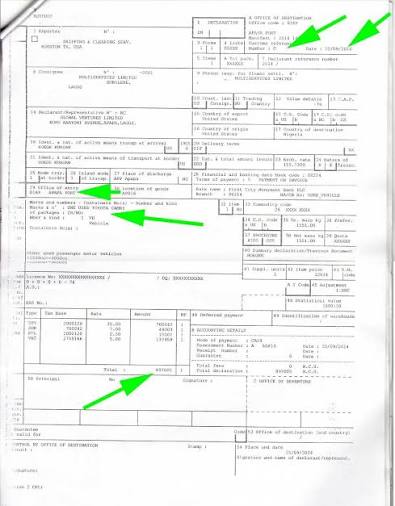
This is especially important for imported vehicles because some cars may enter the market with incomplete or questionable documentation.
A clean-looking vehicle does not always have a clean history.
Verify imported vehicle documents carefully
Imported vehicles often require additional checks because they may have passed through multiple countries or owners.
Check:
- Import documents
- Customs clearance records
- Shipping records where available
- Duty payment documents
- Previous registration records
Fake import documents are commonly used to make illegally imported vehicles appear legitimate.
If the seller cannot explain where the vehicle came from or cannot provide supporting documents, investigate further before buying.
Common mistakes buyers make when checking vehicle papers
Many people lose money because they skip basic verification steps.
Some common mistakes include:
Trusting the seller too quickly
A friendly seller does not guarantee legitimate ownership. Fraudsters often appear confident and professional.
Checking only the registration paper
A single document is not enough. Ownership, registration, and vehicle details should all agree.
Ignoring chassis and engine numbers
These numbers are more reliable than appearance because vehicles can be repainted, modified, or fitted with different parts.
Paying before completing verification
Once money has changed hands, recovering it can become difficult. Always complete checks before payment.
Avoiding professional inspection
A mechanic or vehicle inspection expert can identify issues that an ordinary buyer may miss.
Questions to ask before buying a used vehicle
Before completing a purchase, ask:
- Who is the registered owner?
- Can I verify the vehicle registration officially?
- Do the chassis and engine numbers match the documents?
- Are there previous ownership records?
- Has the vehicle ever been reported stolen?
- Are all transfer documents available?
- Can we complete ownership transfer officially?
A seller who refuses basic questions should be treated carefully.
What to do if you suspect fake vehicle papers
If you believe vehicle documents may be fake:
- Do not complete payment.
- Do not attempt to alter or hide the documents.
- Keep copies of all documents and communication with the seller.
- Report suspicious activity to the appropriate vehicle authority or law enforcement agency.
- Seek professional advice before taking further action.
Buying or possessing a vehicle with fake papers can create serious legal problems, even if you unknowingly purchased it.
A simple checklist before buying any used vehicle
Before paying for a vehicle, confirm:
✓ The chassis number matches the documents
✓ The engine number matches the documents
✓ The seller’s identity matches ownership records
✓ Registration details are verified officially
✓ Documents show no signs of alteration
✓ Transfer procedures are available
✓ Vehicle history has been checked where possible
✓ A professional inspection has been completed
The safest vehicle purchase is not the one with the cheapest price. It is the one where ownership, registration, and vehicle history can all be clearly verified.
Taking time to check vehicle papers before buying can save you from financial loss, legal trouble, and the stress of discovering that the car you purchased was never legally yours.
Leave a Reply