Driving is not only about knowing how to operate a vehicle or follow traffic rules. Many accidents happen because drivers fail to anticipate risks, react too slowly, or assume other road users will always make the right decisions.
This is where defensive driving becomes important. Defensive driving tips help drivers develop safer habits by teaching them how to identify hazards, manage risks, and make better decisions behind the wheel.
A defensive driver does not simply focus on their own actions. They pay attention to what other drivers, pedestrians, weather conditions, road layouts, and unexpected situations could do next. These habits can help reduce the chance of collisions and create a safer environment for everyone on the road.
What Is Defensive Driving?
Defensive driving is a driving approach that focuses on preventing accidents by staying alert, anticipating possible dangers, and making safe decisions before problems occur.
A defensive driver does not assume:
- Other drivers will follow traffic rules.
- Vehicles will always stop when they should.
- Pedestrians will notice approaching cars.
- Road conditions will remain predictable.
Instead, they prepare for possible mistakes made by others.
For example, if a driver ahead is approaching a traffic light quickly, a defensive driver does not assume the vehicle will stop. They reduce speed slightly, maintain enough distance, and prepare to react if the driver runs the red light.
Defensive driving combines awareness, patience, and good judgment.
Why Defensive Driving Matters
Road accidents are often caused by human behavior rather than vehicle problems. Common causes include speeding, distracted driving, aggressive behavior, poor decision-making, and failure to recognize hazards.
Practicing defensive driving can help drivers:
- Reduce the likelihood of crashes.
- React faster to unexpected situations.
- Avoid dangerous driving behaviors.
- Protect passengers and other road users.
- Lower vehicle repair costs caused by preventable accidents.
- Build confidence in challenging driving conditions.
A defensive driver understands that being right is not always enough. For example, you may have the legal right of way, but if another driver ignores a stop sign, avoiding the collision is more important than proving you were correct.
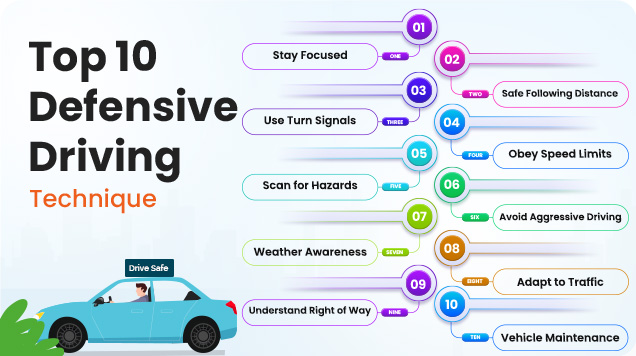
Stay Focused and Eliminate Distractions
One of the most important defensive driving habits is maintaining full attention on the road.
Modern distractions are everywhere. Mobile phones, conversations, eating, adjusting vehicle controls, and even looking at roadside activities can reduce a driver’s ability to react quickly.
A distracted driver may notice a hazard several seconds too late. At higher speeds, those few seconds can represent a significant distance traveled without proper control.
To stay focused:
- Put your phone away before driving.
- Avoid texting or checking notifications.
- Set navigation directions before starting your trip.
- Adjust mirrors, seats, and climate controls before moving.
- Keep conversations from becoming distracting.
- Avoid driving when extremely tired.
Professional drivers often treat driving as an active task, not a routine activity. Even familiar roads require attention because unexpected events can happen at any time.
Maintain a Safe Following Distance
Following too closely is one of the most common mistakes drivers make. When there is not enough space between vehicles, drivers have less time to react if the vehicle ahead suddenly brakes.
A defensive driver maintains a safe following distance to create a reaction zone.
A common guideline is the three-second rule:
- Choose a fixed object ahead, such as a sign or tree.
- When the vehicle ahead passes it, start counting.
- You should reach that point after at least three seconds.
Increase the distance when:
- Driving in rain.
- Driving at night.
- Roads are slippery.
- Traffic conditions are unpredictable.
- Following motorcycles or large trucks.
For example, if a truck blocks your view of the road ahead, leaving extra space gives you more time to see and react to hazards.
Always Scan the Road Ahead
Many inexperienced drivers focus only on the vehicle directly in front of them. Defensive drivers look farther ahead to identify problems before they become immediate threats.
Effective scanning involves checking:
- Vehicles ahead.
- Vehicles behind.
- Side streets.
- Pedestrians near the road.
- Traffic signs and signals.
- Road conditions.
- Possible escape routes.
Looking farther ahead helps you notice slowing traffic, construction zones, changing traffic lights, or unsafe driving behavior early.
A useful habit is to avoid staring at one point. Keep your eyes moving and continuously gather information about your surroundings.
Expect Other Drivers to Make Mistakes
A major principle of defensive driving is avoiding assumptions.
Even if you have a green light, another driver may fail to stop. Even if you are in your lane, another vehicle may drift into it. Even if a pedestrian appears to be waiting, they may suddenly step onto the road.
This does not mean driving with fear. It means driving with awareness.
Examples of defensive decisions include:
- Checking both directions before entering an intersection.
- Slowing down near vehicles that appear distracted.
- Leaving room when passing cyclists or motorcycles.
- Avoiding sudden reactions to aggressive drivers.
Your goal is not to control other people’s behavior. Your goal is to create enough time and space to respond safely.
Follow Speed Limits and Adjust Your Speed
Speed limits are designed based on road conditions, traffic patterns, and safety considerations. However, defensive driving requires more than simply following posted numbers.
A driver may need to slow down below the speed limit when conditions are unsafe.
Reduce speed when:
- Roads are wet or icy.
- Visibility is poor.
- Driving through crowded areas.
- Approaching schools or pedestrian zones.
- Traffic patterns are uncertain.
Speed affects both reaction time and stopping distance. The faster a vehicle travels, the more distance it needs to stop safely.
Driving slightly slower can provide more control and more time to make decisions.
Keep Your Vehicle in Good Condition
A safe driver also pays attention to vehicle maintenance. A well-maintained vehicle is easier to control and less likely to experience unexpected failures.
Important checks include:
- Tire pressure and tire condition.
- Brake performance.
- Lights and indicators.
- Windshield visibility.
- Engine fluids.
- Mirrors and safety equipment.
For example, worn tires can reduce grip on wet roads, making it harder to stop quickly. A driver who ignores maintenance may create risks that could have been prevented.
Use Mirrors and Check Blind Spots Properly
Mirrors provide important information, but they do not show everything around your vehicle.
Blind spots are areas where other vehicles may not appear in your mirrors.
Before changing lanes:
- Check your mirrors.
- Signal your intention.
- Look over your shoulder to check blind spots.
- Move only when it is safe.
This simple habit prevents many lane-change collisions.
Drivers should also avoid staying too long in another vehicle’s blind spot, especially near large trucks. If you cannot see the truck driver’s mirrors, there is a good chance they cannot see you.
Avoid Aggressive Driving
Aggressive driving increases risk because it reduces patience and encourages poor decisions.
Common aggressive behaviors include:
- Tailgating.
- Speeding.
- Frequent unnecessary lane changes.
- Ignoring traffic signals.
- Competing with other drivers.
- Road rage.
A defensive driver controls their own emotions and avoids reacting to aggressive behavior from others.
If another driver behaves dangerously, the safest response is usually to create distance rather than engage.
Be Extra Careful in Poor Weather Conditions
Weather can quickly change driving conditions. Rain, fog, snow, strong winds, and extreme heat can affect visibility and vehicle control.
Defensive driving in poor weather includes:
- Reducing speed.
- Increasing following distance.
- Using headlights when visibility is reduced.
- Avoiding sudden braking or sharp turns.
- Paying attention to road surface conditions.
For example, during heavy rain, water can reduce tire contact with the road. Driving at normal speeds may become unsafe even if the road looks familiar.
Prepare for Emergency Situations
Defensive drivers think about what they would do if something unexpected happens.
Possible situations include:
- A vehicle suddenly stopping.
- A tire blowing out.
- A pedestrian entering the road.
- A vehicle losing control nearby.
- A traffic light malfunctioning.
Good preparation includes:
- Keeping both hands available for steering.
- Knowing how your vehicle responds under braking.
- Avoiding unnecessary distractions.
- Keeping emergency supplies when appropriate.
Having a plan reduces panic during stressful situations.
Defensive Driving Tips for New Drivers
New drivers often focus on controlling the vehicle, but safe driving requires developing awareness.
Helpful habits include:
- Practice in different traffic conditions.
- Avoid carrying too many passengers while learning.
- Drive at comfortable speeds.
- Ask experienced drivers for feedback.
- Learn from mistakes instead of repeating them.
- Avoid copying unsafe habits from other drivers.
Confidence comes from experience, but experience should be built through safe decisions.
Common Defensive Driving Mistakes to Avoid
Even drivers who understand defensive driving can develop unsafe habits.
Common mistakes include:
Assuming Other Drivers See You
Making eye contact or using signals does not guarantee another driver understands your intention. Always be prepared for unexpected actions.
Driving on Autopilot
Familiar routes can make drivers less alert. Accidents can happen on roads you use every day.
Overconfidence
Experienced drivers can still make mistakes. Confidence should improve decision-making, not reduce caution.
Relying Only on Technology
Features such as blind-spot monitoring, lane assistance, and automatic braking can help, but they do not replace an attentive driver.
Technology supports safe driving. It does not remove responsibility.
A Simple Defensive Driving Checklist
Before and during every trip, ask yourself:
- Am I fully focused?
- Is my vehicle ready for the journey?
- Am I leaving enough space?
- Am I watching beyond the vehicle ahead?
- Am I adjusting my speed for conditions?
- Am I prepared for other drivers’ mistakes?
These questions encourage safer habits every time you drive.
The Mindset That Makes Someone a Defensive Driver
Defensive driving is not about driving slowly or being afraid of the road. It is about making smart decisions based on awareness and preparation.
A defensive driver understands that roads are shared spaces. Every decision affects other people, from choosing a safe speed to allowing another vehicle enough room to merge.
The best defensive drivers are not the ones who avoid every difficult situation. They are the ones who recognize risks early and make choices that prevent those situations from becoming dangerous.
Safe driving begins before the engine starts. It begins with the decision to pay attention, stay patient, and take responsibility for every journey.
Leave a Reply