A road accident can happen within seconds, leaving drivers, passengers, and bystanders unsure about what to do next. In those moments, knowing the right emergency numbers for road accidents can help you get medical assistance, report the incident, and receive support faster.
The first few minutes after a crash are often the most important. Someone may need urgent medical care, traffic control may be required, or authorities may need to secure the area to prevent further accidents. Having the correct emergency contacts saved on your phone can make a real difference when every second matters.
This guide explains the emergency numbers to call after a road accident, what each service does, and the steps you should take while waiting for help.
Emergency numbers to call after a road accident
The emergency number you should call depends on your country and location. Different services handle different parts of an accident response, including medical emergencies, police assistance, fire rescue, and road safety support.
For many countries, there is a general emergency number that connects callers to multiple services. However, some regions still use separate numbers for police, ambulance, and fire services.
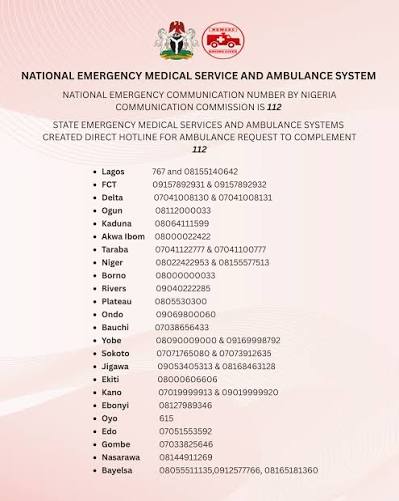
If you are in Nigeria, the main emergency numbers for road accidents include:
| Emergency service | Number | When to call |
|---|---|---|
| National Emergency Management Agency (NEMA) | 112 | General emergencies requiring urgent assistance |
| Federal Road Safety Corps (FRSC) | 122 | Road crashes, traffic emergencies, and road safety assistance |
| Police emergency line | 112 | Security concerns, accidents involving disputes, crime, or serious incidents |
| Fire and rescue services | 112 | Vehicle fires or rescue situations |
Emergency numbers may change or vary depending on your location, so it is advisable to confirm the correct numbers for your state or region and save them before an emergency occurs.
What emergency services do after a road accident
Many people call emergency numbers without knowing which service can help. Understanding their roles helps you contact the right people quickly.
Medical emergency services
Medical responders provide urgent care for injured victims. They may:
- Treat bleeding and injuries at the accident scene
- Provide first aid
- Transport seriously injured people to hospitals
- Assess victims who appear fine but may have hidden injuries
Some injuries, such as internal bleeding or head trauma, may not be immediately visible. Getting medical attention quickly can prevent complications.
Road safety authorities
Road safety agencies help manage crash situations by:
- Arriving at accident scenes
- Assisting injured victims
- Controlling traffic around the area
- Documenting accident details
- Helping remove damaged vehicles from dangerous positions
In Nigeria, the Federal Road Safety Corps (FRSC) plays a major role in responding to road crashes and improving road safety awareness.
Police assistance
Police support may be necessary when:
- There is a serious injury or death
- Drivers disagree about what happened
- A driver leaves the scene
- There is suspected reckless driving or criminal activity
- Property damage requires an official report
A police report may also be important for insurance claims or legal processes.
Fire and rescue services
Vehicle accidents sometimes involve trapped passengers, fuel leaks, or fires. Fire and rescue teams have equipment to:
- Remove people trapped inside vehicles
- Control vehicle fires
- Handle dangerous situations around damaged vehicles
What to do immediately after a road accident
Calling emergency services is important, but your actions before help arrives can also protect lives.
Check if the area is safe
Before approaching an accident scene, look for dangers such as:
- Moving traffic
- Fire or smoke
- Fuel leaking from vehicles
- Broken glass
- Electrical hazards
Do not put yourself in danger while trying to help others.
Move to a safe location if possible
If your vehicle is still operational and there are no serious injuries, move it away from traffic when it is safe to do so.
If moving the vehicle could worsen injuries or create another danger, leave it and wait for emergency responders.
Check injured people
If you can safely assist, check whether victims are:
- Conscious
- Breathing normally
- Bleeding heavily
Avoid moving seriously injured people unless they are in immediate danger, such as a vehicle fire. Moving someone with a possible spinal injury can make their condition worse.
Call emergency services with clear information
When calling, provide details such as:
- Exact accident location
- Nearby landmarks
- Number of vehicles involved
- Number of injured people
- Type of injuries observed
- Whether there is a fire or danger at the scene
Clear information helps responders prepare before arriving.
For example, instead of saying:
“An accident happened on the highway.”
Give details like:
“There is a crash involving two vehicles on the Abuja-Kaduna highway near the toll gate. Three people appear injured, and one person is trapped inside a vehicle.”
Common mistakes people make after road accidents
Knowing what not to do can prevent further harm.
Leaving the accident scene
Driving away after an accident, especially one involving injuries, can create serious legal problems. Even if you are not responsible for the crash, leaving may make the situation worse.
Arguing instead of helping
Some accident scenes become chaotic because drivers immediately focus on blame. The first priority should be safety and getting help for anyone injured.
Giving injured people food or drinks
People often try to help by offering water or food. This can be risky because some medical procedures may require an empty stomach, and unconscious victims may choke.
Recording instead of helping
Taking photos or videos may be useful for documentation, but helping injured people and contacting emergency services should come first.
How to prepare before a road accident happens
Emergency preparation is not only for drivers. Passengers and regular road users can also benefit from knowing what to do.
Save emergency contacts on your phone
Add important numbers with clear names, such as:
- Emergency services
- Road safety authorities
- Family members
- Your insurance provider
Do not rely only on searching online during an emergency because network problems or panic may make it difficult.
Keep basic safety items in your vehicle
Useful items may include:
- First aid kit
- Warning triangle
- Flashlight
- Fire extinguisher
- Reflective vest
- Phone charger or power bank
These items can help you stay safer while waiting for assistance.
Learn basic first aid
Basic first aid knowledge can help you respond before professional help arrives. Simple skills like controlling severe bleeding or checking breathing can be valuable during emergencies.
What information to collect after a road accident
Once the situation is safe and emergency assistance has been contacted, collect important details if you are able to do so.
Useful information includes:
- Names and contact details of drivers involved
- Vehicle registration numbers
- Insurance details
- Photos of vehicle damage and the accident scene
- Contact details of witnesses
- Official accident report information
Avoid admitting fault at the scene before the facts are properly assessed.
Emergency numbers for road accidents when travelling abroad
If you travel to another country, do not assume your local emergency number will work.
Many countries use a universal emergency number:
- 112 works across many European countries and some other regions.
- 911 is commonly used in the United States, Canada, and some other locations.
Before travelling, check the emergency numbers for your destination and save them offline.
Why saving emergency numbers matters
Most people do not expect to experience a road accident, but emergencies often happen without warning. Searching for a number during a stressful situation wastes valuable time.
A saved emergency contact allows you to act quickly, communicate clearly, and get the right assistance.
The best time to prepare emergency contacts is before you need them. Save important numbers today, keep your phone charged while travelling, and make sure passengers know what to do if an accident happens.
Leave a Reply